
Official Artist
Warren Peltier
Author
50,882 views|
5
Posts
Processing Yancha
Lounging in a swank teahouse, perching on wooden log in our favorite tea shop, or even nesting on our living room sofa, might we sample and compare, gaiwan after gaiwan, teapot after teapot, varied styles of Wuyi Yancha. However, in this comfortable, leisurely process, little are we aware or appreciative of the total, collective effort put into each single tea leaf.
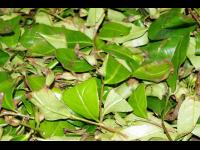
Focusing on a single aspect, the observable changes to the tea leaf as it undergoes the stages of processing, I spent an entire night in the tea factory, taking photos of Zhengyan Shuixian 正岩水仙.
While most visitors probably won’t want to spend a night at a tea factory (it’s a simple brick and concrete workspace, not designed for comfortable living), if you’re unlucky enough like me, stranded in the Tian Xin Cun 天心村tea village (until a particular batch of tea leaves were ready for transport the next day), you might get a glimpse of life inside the tea factory, and learn something about tea processing methods. Of course, you will also hear the unending ka-chunk and whir of the tea machines necessary for modern, large batch tea processing.
Journey of the Leaf
Tea is picked in the tea gardens, where soon after the sacs are immediately shipped to the factory. Upon reaching the factory, the leaves are dumped onto the factory floor to relax. They might be arranged into neat rows; but if there is just too much leaf, they’re just left in a huge, flat pile. Occasionally, the leaves are flipped to allow even exposure to air. When the withering machines are ready, tea leaves are scooped into bamboo baskets using a woven bamboo scooping basket, or simply grabbed with the hands, then placed into the rows of withering/shaking machines. A bucket of hot charcoal supplies heat to each machine as the leaves undergo withering and fermentation/oxidation in the shaking machine, a process lasting the entire night. The force (speed) of shaking and duration are all controlled by an experienced tea master. It’s during the shaking and fermentation stage that oolong tea develops its characteristic aroma. After alternately shaking leaves and letting them relax, the leaves slowly wilt and leaf edges turn brown.
 The leaves here
are noticeably brown on the edges, while most of the leaf still retains its
green luster.
The leaves here
are noticeably brown on the edges, while most of the leaf still retains its
green luster.
Taking fermented leaf out of the shaking machines, the workers dump the leaves into piles on plastic sheets to relax a bit. From there, they go to the tea fixation machine, where the leaves are fired at very high temperature to stop enzymatic processes in the leaves.
As soon as the leaves come out of the fixation machine, while still hot, in small batches,
they’re put into the rolling machine which expresses the juices from the
leaves, and breaks down the cell walls. At this point, the leaves take on a
rolled appearance, and are quite moist and sticky when touched. After rolling,
the leaves are left to relax and cool in piles on plastic sheets, awaiting the
drying machine.
Leaves come out of the drying machine, with a changed, darker appearance, feeling dry to the touch; although the stems still feel slightly moist, not extremely rigid and brittle. They’re then piled on plastic sheets to relax again. The dried leaves, having the faint scent of autumnal leaf, are now ready for test brewing and enjoyment. Instead of leaf, I opted for the stems only just to see what they could do. Surprisingly, the steeped stems of this Zhengyan Shuixian were very good for the first 2 infusions, but became weaker and uninteresting over subsequent brews. The workers however, had a surprised look on their faces and laughed when they realized they were drinking stem infusions, appreciative of the flavor. Of course, the brewed leaves were all that much more fantastic. I saw workers take a few handfuls of the freshly made Zhengyan Shuixian, perhaps to enjoy later.
This freshly dried maocha will later be de-stemmed entirely by hand, a painstaking process, separating each individual leaf from the stem, discarding yellow, ugly leaves and useless stems (although the stems might be swept up and collected for use in tea pillows). After de-stemming, a task often seen in tea shops, the leaves must undergo roasting to further develop flavor and aroma in the leaf while also turning the leaves a dark brown-black color from the brown-green.

Roasted Infusion, Maocha Infusion
Returning toFuzhoufrom Wuyishan, I had a chance to sample the already roasted leaves of Shuixian – how spectacular the taste was, and completely different from the green leaves of maocha that we enjoyed in the tea factories in Wuyi. The tone, ambience, sensation, flavor, scent of tea evolves as time advances…

Author of The Ancient Art of Tea 《中国古代茶技艺》. 新浪微博: http://weibo.com/warrenpeltier 腾讯微博:http://t.qq.com/tea_author
