Video: http://www.youtube.com/watch?v=4j4m0NwspT0&feature=player_embedded


Elephant White
A
wealthy businessman contracts an assassin, Curtie Church (played by Djimon
Hounsou) to avenge the murder of his daughter by slave traffickers in Thailand.
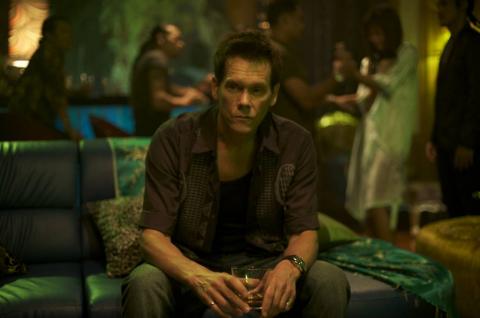
With the help of his paranoid, but hilarious weapons supplier Jimmy (played by
Kevin Bacon), a merciless Church exterminates gangsters by the dozens.
Rewarded
by-the-head Church moves in hard and fast through the shady corners of Bangkok,
using all manners of destructive heavy artillery and bone crushing Thai
fighting to rack up a mountain of body count. Not according to plan, he frees a
young prostitute in distress but eerie situations arise. The good thing is,
she’s on his side and extremely bent for revenge.
Director
of Ong Bak, Prachya Pinkaew is one of
the most respected martial arts film directors in Asia. Making his first
English directorial debut on Elephant
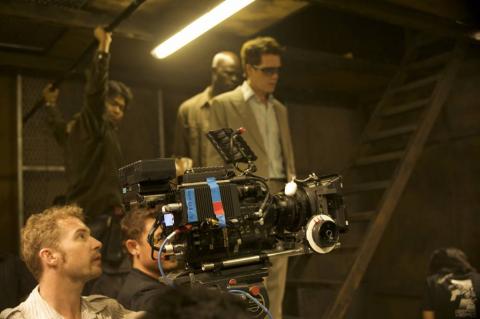
White with Australian DP Wade Muller, the film is ambitiously shot within
two months entirely in Bangkok.
The
48-day shoot sees very little daylight, in fact over 90% of the film features
night scenes so the new MX–Sensored RED cameras with an ISO setting of 800
brilliantly captures the Bangkok skyline. Comparing to the limitations of the
old sensor, the new MX sensor is completely noise free , we would often shoot
parts of action scenes at 96FPS instead of adding a lot more light we would
increase the ISO from 500 which was our base to 800 and slightly open up the
lens.
During
pre-production on this film, Muller maximises the time location scouting and
shooting test shots on Djimon’s stand-in. The actress Guzjung, who plays Mae, has very light skin and Djimon is
very dark. Therefore vigorous tests prove the new MX sensor lives up to its
reputation. Not only for its sensitivity in low light conditions but also the
way it handled the extreme contrast difference between the two actors
side-by-side was amazing, the capabilities of the new MX sensor surprises
Muller beyond expectations. Before the tests, he was expecting to back off the
light on Guzjung every time they were together in the frame.
On
set the team uses Ultra Primes and Optimo Zooms , often we would changed the
camera to 3K mode with the 180mm or 24-290mm , to get extra focal length for
scenes like the sniper’s point-of-view. A PL converted Tokina 11-16mm T2.8 zoom also complements the Ultra Primes
perfectly. The only filtration used was ND’s and ND Grads. The focus pullers did
a great job we were shooting between T2 – T2.8. we had four cameras on set two MX REDs and two REDs. During action
sequences, all four cameras are definitely in operation but occasionally they
are used to provide extra coverage in dialog scenes with multiple actors.
Kinoflos are frequently used for interior close ups, we also had some of them
in shot after the art department disguises them with plastic wrapping to carry
off a worn-out exterior look. To maximise the output and get the most out of
the balloon lights we would bounce 18K’s off them.
Wanting
the film to possess a edgy look, Prachya jokingly comments about not requiring
tripods on location. All-in-all a large portion up to 75% of the film is indeed
shot handheld. Whenever it is feasible, we would try light 360° , flags and nets were always
being constantly adjusted right up until we rolled. We had practical light
sources in most of the shot they were all connected to a dimmer boards.
In
one of the scenes, Church hastily flees Ratchadon’s whore house after a killing
spree. Despite Church being a relentless assassin, Prachya crafts the
atmosphere of that sequence to appear sorrowful so audiences will feel
empathetic for the girls standing in the stinking alley soaked to the bone.
This effect is achieved with the ten girls underneath multiple rain bars
naturally spraying in all directions. The steadicam shot begins at 24FPS moving
behind Church, and increases to 60FPS up towards the vulnerably exposed girls.
The shot then slowly creeps forward and eventually focuses back round to Church
walking forward as the camera tracks back.
The very
large forest environment is another location in particular where the MX
camera’s low light sensitivity comes in handy. To spread an even layer of hazy
smoke on-site, a machine normally used for insecticides becomes an ingenious
solution. A network of 25-meter long tubes with tiny holes injected at equal intervals,
these adjoining tubes are laid in the background to create a gradual rise of
very realistic mist.
There
are numerous specialised weaponry used in the film from sniper rifles such as
the Accuracy International and Barrett. Powerful shotguns like Cobray Street Sweeper has the whole team
hidden behind Lexan sheets each time they are hot. Kudos to Kevin Chisnall and
his team for keeping the entire crew safe from the applications of heavy
artillery and firepower throughout the filming process.
Another
feat to acknowledge is filming of the fight choreography where Prachya and his
team really excels in. To get in the midst of all the action, the camera crew
strips down the cameras to a bare minimum and only uses the lightweight 11-16mm
Tokina. The after-effects are alarmingly bold where much of the action narrowly
misses the edges of the camera lenses. Overall, the fight sequences are
sensationally edited with wider profile shots.
Elephant White is the third feature length
film Muller has been involved with in Thailand. Perhaps it is the undefeated
professionalism and efficiency of the Thai crew that keeps him coming back for
more. It is with no doubt the film industry in Thailand is a force to be
reckoned with.