
Official Artist
Carlos Nathansohn
Illustrator
55,069 views|
10
Posts

Dear Max, 3, the third generation of Nathansohn in Brazil

To all AnD friends one of the best. Gheorghe Zamfir (Romanian pronunciation: [ˈge̯orge zamˈfir]; born April 6, 1941 / Găeşti, Romania) is a Romanian pan flute musician who has received 120 golden and platinum disc awards and sold over 200 million albums.
Zamfir is known for playing an expanded version of the traditional Romanian-style pan flute (nai) of 20 pipes to 22, 25, 28 and 30 pipes to increase its range, and obtaining as many as nine tones from each pipe by changing the embouchure.
He is...Read more
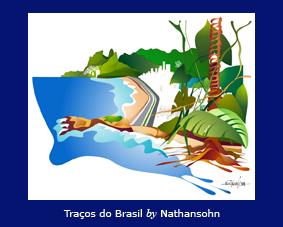 RIO_Praia do Diabo, Arpoador, Ipanema, Leblon e Pedra da Gávea.MY YOUTH
Ipanema with the mouse and digital free-hand tools. The song of Roberto Menescal and Wanda Sá is to remember Bossa Nova in Bar Veloso, Street-Car (bondes), Cine Astória and in the first group of: Banda de Ipanema, Feira Hippie da General Osório...Read more
We present the general concept of “Design” according to the definition made by the international body, the International Council of Societies of Industrial Design / IC...Read more
 DK Stylissimus facing the millenarian existencial looping
Sumerian Rescue by Nathansohn using digital free-hand tools over a photo by Denise Keller.
Brazilian Artists
See some quality art from Brazil in:
http://www.npoint.com.br/demonte/index.html 2. Eduardo Brettas
http://www.avesdobrasil.com.br/galeria.htmv 3. Enrico Bianco
Father of my friend Paulinho Bianco, one of the greatest surfer of years 70-Ipanema ...Read more
StartFragment
Aloha AnD’s dear friends,
I am glad to send a design for the two years Alive not Dead’s birthday and for the comemorative T-Shirt Design Competition.Well, what has been done has a builted in philosophical character. Like an illustrator, I have tried to insert at the same message, the icons of a free-life style that ends on them.The ’s image is a “ ”, a fishing bird that lives at Archipelago and at Island – Brazilian territories at the Atlantic Ocean. It is a skilful surfer ...Read more
The wave has the Jaws', Maui's, and Hawaii's characteristics. Here I put together three different waves on photos giving my own interpretation about them. Before drawing the surfer, I created an animation through digital free-hand tools, putting it in the right position into the tube. Surfer's dimension on the top of the wave is real.For the first time I added the light blue and water-green degradée (tone) with Staedtler Karathaving a good result. Now the perspective, the tunnel of the sunshine and the explosion o...Read more
Sorry to all my AnD friends, I'm a communicative creature wich write and speak a good text and speech in portuguese, my language. As I know my restrictions in english, I can't go besides these limits and not exceed the small and resumed comments. But I try.In the name of friendship I offer a gift in a universal language of music, songs of my youth in Ipanema, before the fast foods and standard globalization.Now, each first friday in No Barato da Joana (see banner in the photos), Joana Angelica street, remember again in marvelous...Read more
 If you are a Colored Pencil player, come to change experience and jobs.
Your friend ... alive not dead!
Carlos Nathansohn
Carlos Nathansohn
